Jewish Sober Living in Rockland County, New York

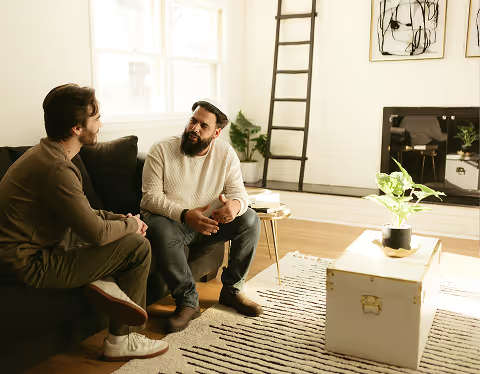
A fist bump between a Villager and a staff member at The Village
Jewish sober living is structured, alcohol-free and drug-free housing for people in recovery from addiction, in a home that keeps kosher and keeps Shabbos. The Village operates six of them in Rockland County, New York, for adults 18 and older. Most Villagers come to us directly after rehab or detox. The average stay is six to eight months.

Who The Village is for

Adults 18 and older. Our average Villager is in their mid-twenties.

People coming out of rehab, detox, or a treatment program who already know that going straight home is not the plan.

Orthodox, frum, traditional and unaffiliated Jews who want a kosher, Shomer Shabbos environment without anyone imposing religion on them.

Villagers come to us from Monsey, Brooklyn, Lakewood and the Five Towns, and also from across the country and from around the world. More than one family has put a son on a plane because there was nowhere closer that understood both the addiction and the Yiddishkeit.

What The Village is not

We would rather tell you now than waste your time.

We are not a rehab. We are not a detox. We are not a psychiatric facility. We do not provide medical care or supervision.

If someone is still actively using and needs to detox, that has to happen in a medical setting first. Call us anyway and we will help you find one.

If someone is in acute psychiatric crisis, we are not the right level of care.

Every Villager is required to be in therapy, and under psychiatric care where that applies. We help you find the right people. We are not the clinical provider ourselves.

If you are not sure whether we are the right fit, call and we will talk it through honestly. Sometimes the answer is a different program, and we will tell you that.

What makes a Jewish sober living home different

Most sober living homes are built around compliance. House rules, drug tests, a curfew, a bed. Those things matter and we have them. But they are not what keeps someone sober.

For a frum person in recovery there is a specific problem a general sober living home cannot solve. You can get clean somewhere with no kosher kitchen, no minyan, and nobody who understands what it is to walk into shul for the first time afterward and wonder who knows. But you cannot rebuild a life there, because the life being rebuilt is a Jewish one.

Here is what that looks like day to day.

You can eat.Every kitchen is kosher. A chef cooks real food, with attention to what people actually like.
Shabbos happens.Candles, a table, food, people. Not a gesture toward Shabbos. An actual Shabbos, every week, in a house where it is simply normal.
Yom Tov happens too.Tishrei, Pesach, Purim, Simchas Torah. The days that are hardest for someone in recovery are the days we plan around hardest.
You are welcome in shul.Local rabbanim and communities know us, and Villagers are welcome. Nobody has to explain themselves at the door.
And nobody makes you daven.We are unapologetically a Shomer Shabbos and kosher home, and we do not impose religion on anyone. We ask that halachic standards are kept in the shared spaces. What happens in your own relationship with Hashem is yours.

That last one matters more than people expect. Plenty of Villagers arrive angry at religion, or worn out by it, or convinced they are too far gone to be wanted. Making room for that instead of pushing against it is usually where the way back begins.
What living at The Village includes

Absolute Attentiveness
From favorite foods in the pantry to getting a driver’s license, we embrace each Villager with whole life therapy to build new foundations of self-value, connection and trust.
Clinical Support
Each Villager meets with our clinical director weekly and participates in therapeutic groups. World-class addiction experts provide one-on-one therapy and regular oversight.
Structure
Our counselors tailor individualized schedules based on each Villager’s goals, interests and therapeutic needs.
Goal Reaching
We map out short-and-long-term goals, then provide hands-on support in areas such as commitment, resume building, job placement, time management and follow-through.
Beautiful Accommodation
Each residence feels like a real home because it is one. They are comfortable, welcoming homes designed for community healing.
Kosher Home-Cooked Meals
Every kitchen is kosher. A chef cooks nutritious meals with attention to personal preferences, creating a homey, healthy environment where nobody has to think twice about what is on the table.
Physical Fitness
Every Villager receives membership to a nearby state-of-the-art gym with the option to connect with a personal trainer.
Transportation
Managed rides are provided to and from 12-step meetings, outpatient appointments, courses, interviews and jobs. Every Villager attends a minimum of three meetings a week and we make sure getting there is never the obstacle.
Each residence feels like a real home—because it is one
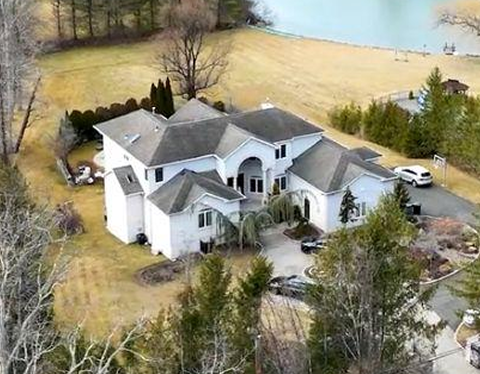
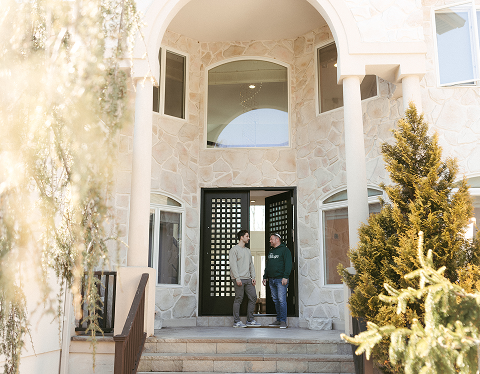
Aerial view of one of The Village's sober living homes in Rockland County, New YorkThe stone entrance of one of The Village's Jewish sober living homes in Rockland County, New YorkVillagers in conversation in the living room of one of our homes

Our six Jewish sober living homes

Main Home 1

Main Home for Men
Our largest men's home. Fully staffed, kosher kitchen, home-cooked meals, and the daily structure that makes early recovery hold.

Main Home 2

Main Home for Men
A second main home for men, with the same full-service support in a smaller, quieter setting.

Ma’s House

Main Home for Women
Our main home for women in recovery. Kosher, Shomer Shabbos, fully staffed, with the same whole-life support as our men's homes.
Who was Ma?

Ma’s House

לעילוי נשמת: ברכה חנה בת ישראל
Brenda was known for her warm, giving nature and outgoing spirit, forming connections wherever she went. Deeply devoted to her children and grandchildren, she always put family first. As a nurse, she had a natural way of loving and caring for others. Ma’s house is a representation of her home, always open filled with warmth and love.

Step-Up 1

Step-Up Home for Men
For Villagers moving toward fully independent living. More freedom, less scaffolding, and the community still around them.

Step-Up 2

Step-Up Home for Men
A second Step-Up home for men building toward living on their own, with staff nearby rather than on top of them.

Usher’s House

Step-Up Home for Men
Step-Up living for men in the final stretch before full independence, still inside the community they will never age out of.
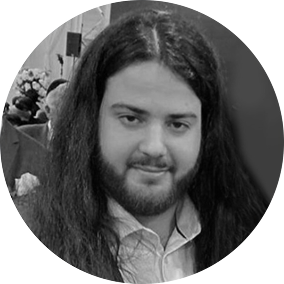
Portrait of Chaim Usher Goldman z"l, in whose memory Usher's House was dedicated

Usher’s House

This house was dedicated in loving memory of:

חיים אשר הלוי גולדמן ז״ל בן ר׳ נחמן נ״י
Chaim Usher, fondly called the Mush Man by his Mom, was a great man who brought fun, spirit and joy to all those around him. He had incredible insights in Torah and Avodah and inspired all of us to grow in our avodas Hashem. He fought with all his might to overcome darkness. He taught us the value of struggle and the definition of love. We are grateful to Hashem for his unique wrapping paper that taught us to focus on the gift inside each and every person and connect to their holy and pure neshama.

May all those who walk through the doors of Usher’s House recognize their Divine light, feel their worthiness and utilize their greatness to radiate their Divinity to all those around them.
Who was Usher?

What a week actually looks like

Twelve-step meetings at least three times a week, with rides provided. Therapy. Work, or looking for work. The gym.

Wednesday is family dinner, with Villagers, staff and alumni at one table. There are weeknight programs and weekly trips.

Then Shabbos.

Across the year: Yom Tov together, a summer camping Shabbaton, Thanksgiving, the Super Bowl, New Year's, and Soberfest, the largest sober Purim event in the world.

There is a curfew. There is no dress code. You will most likely have a roommate.

What it costs

$5,000 per month

We are not currently covered by insurance. Some scholarships may be available on a needs basis, and it is worth asking.

That covers housing, meals cooked by a chef, gym membership, transportation, clinical oversight, case management, and the community itself. It does not cover your therapy or psychiatry, which are billed separately by your own providers.

Most programs in this category will not put a number on a page. We think a family working out whether they can do this deserves to know before they pick up the phone.

How long people stay

The average stay is six to eight months.

Some people need less. Many need more and move through the Step-Up homes on the way to living independently.

We do not push anyone out on a schedule, and we do not hold on to anyone who is ready to go.

Coming to us from out of town

Most Villagers do not live in Rockland County when they arrive.

We are in Suffern, near Monsey, close enough for family to visit and far enough from the people and places that were part of the using. That distance is deliberate.

Families come to us from across the United States, from Israel, and from further. We have done this with parents in other time zones many times, and we will walk you through how visits, Shabbos and communication work for your situation.

Common questions

Where is The Village located?
Suffern, New York, in Rockland County. Near Monsey, not in Monsey. All six homes are in Rockland County.
How much does Jewish sober living at The Village cost?
$5,000 per month. We are not currently covered by insurance. Some scholarships may be available on a needs basis.
Do I have to keep Shabbos to live at The Village?
The house is a Shomer Shabbos home, and every individual is on their own journey. We do not require keeping Shabbos personally. We do ask that halachic Shabbos standards are observed in the shared public spaces.
Does The Village accept women?
Yes. Ma's House is our main home for women in recovery.
How old do residents need to be?
Eighteen and older. The average Villager is in their mid-twenties.
Do I need to find my own therapist and psychiatrist?
Yes, but not on your own. We help you find the right people for you. Every Villager is expected to be in therapy and, where applicable, under psychiatric care.
How long do people typically stay?
It is different for each person, but the average stay is six to eight months.
Do residents attend 12-step meetings?
Yes, a minimum of three times per week, and we provide the rides.

Talk to someone today

(845) 671-5769

You will reach a real person, usually within a few hours. We will ask what has been going on and what you have already tried. There is no intake script and no pressure.

Everything you tell us stays between us. You can call just to talk it through. Nobody has to decide anything today.

Talk to someone today

Two women talking over a table at Ma's House, The Village's home for women in recovery

“Traditional sober living is about getting off drugs and following house rules. The Village focuses on belonging and attachment first. Once clients feel good about themselves, THEN they’re motivated to get jobs and build independent lives.”

— Devora Shabtai, LCSW, MSc, PhD(c), Beachway Therapy Center
Chat with us